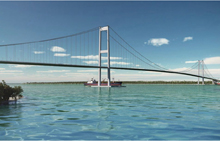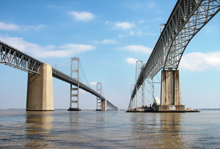
The bridge remained open to traffic throughout the project, in which Spencer managed the replacement of the load-bearing A-frames that connect the 1,410m main span bridge deck to the towers at either end of the bridge.
The four solid steel frames had to be replaced because their bearings had become worn over the 34 years since the suspension bridge was built.
Spencer carried out all the work on site, working with supply chain partners, and designed and installed temporary ‘pendels’ – load-bearing arms – to support the carriageway prior to transfer to permanent supports.
The A-frames and bearings have now been replaced by a more robust system of pendels and ‘wind shoes’, which absorb wind loading on the bridge deck and reduce the associated loads on the new bearing system.
Spencer worked with Arup on the US$6 million project. Arup developed the design solution for Spencer to implement.
Spencer technical director Nick Cooper said that the delivery of the project gives the Humber Bridge security in its support bearing systems for many years ahead. “It has removed the risk of a catastrophic failure that would have required major, unplanned works and the inevitable long-term closure of the bridge, with all the serious consequences that would have had for the region’s transport infrastructure and economy.”
The bridge remained open throughout the project, even during the critical periods when the bridge loads were transferred to the temporary and then permanent new supports.