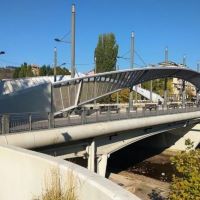
HEB had been working on upgrading the original Ferrymead Bridge at the time of the earthquakes that hit New Zealand in 2011. The bridge was badly damaged and the decision was taken to build a new structure to meet new design standards introduced following the earthquakes.
Work will begin in the new year. Temporary bridges have been installed and traffic will be diverted to them in late January 2013. Completion of the project is likely to be by mid 2015, but timeframes may have to be adapted if unexpected ground conditions for piling are encountered.
The demolition of the existing bridge will begin in early February 2013 and should be completed by early May 2013. The piling process for the new bridge will take about a year and commence as soon as the existing bridge is demolished.
“HEB construction Limited was originally awarded the contract to widen and strengthen the existing bridge prior to the Canterbury earthquakes and began work in August 2010,” said Christchurch City Council acting transport and greenspace manager Sally Davis. The project was interrupted when the bridge sustained major damage during the Canterbury earthquakes.
HEB has worked with the council and Opus International Consultants under the original contract to develop a new bridge design. It has also undertaken work on temporary infrastructure, diverting wastewater, power and water supply on to the temporary bridges and the approach roads.
The revised estimate to complete the project is US$29.2 million. New Zealand Transport Agency will contribute US$18.5 million.
NZTA southern regional director Jim Harland said that the agency’s significant funding contribution recognises the important role of the Ferrymead Bridge and the route in connecting the eastern suburbs, particularly as a lifeline route for these residents.
The majority of the cost increases on the November 2011 estimate of US$15 million relate to the change in design to address ground conditions at Ferrymead. As a result of the earthquakes, design standards for structures and buildings have increased, which has resulted in the foundations for the new bridge having to be strengthened to meet these new standards.
At Ferrymead, the underlying rock slopes from Mt Pleasant towards the City and this means that the loadings from liquefaction on each abutment are uneven, resulting in the design of both the piles and the bridge itself being complex.