The speed of implementation is possible thanks to a plan put in place over the past few years to ensure that the bridge could be repaired in the event that a cracked girder could not be secured by isolated reinforcement measures. Since 2009, two such support systems have been designed, built and stored ready for such a possibility.
The heavily trafficked bridge, which is about 50 years old, suffers from a number of problems and is to be replaced under a project confirmed in 2011. The bridge is subject to a strict inspection programme, which flagged up the crack in the concrete edge girder.
One lane of the bridge will remain open for most of the time while the operation takes place, with full closure for just five hours overnight tonight for the delicate operation to install the ‘super beam’.
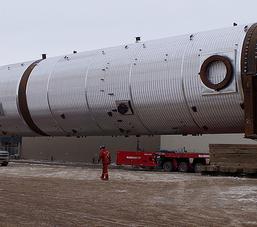
Two 160t cranes will install a 75t beam above a girder that requires reinforcement. Teams have been working since earlier this week to transport and assemble the five sections that make up the support beam.
The support beam will now be installed above the existing girder across its entire length and supported at the piers of the bridge. Steel rods anchored to the support beam will be lowered beneath the problem girder in order to support it fully.
The next phase will be to install a permanent support structure under the bridge. This will consist of installing a steel modular truss below the deck, which will be attached to the span’s two piers. This truss will also support the girder across its entire length, like the support beam installed in the first phase. Installation of the permanent support is in the planning stage.