
I’m sure it will come as no surprise to hear that the innovation most often selected was the use of increased computation capabilities.
Many readers pointed out that developments in both computer design and digital analysis of load-carrying behaviour had led to structural forms becoming more complex and architectural – whilst enabling the spanning of greater distances, “Both things, keeping the basic principles of bridge engineering, have changed the approach of bridge design by reducing times, introducing flexibility and allowing engineers and designers to have powerful tools to communicate and develop ideas easily.”
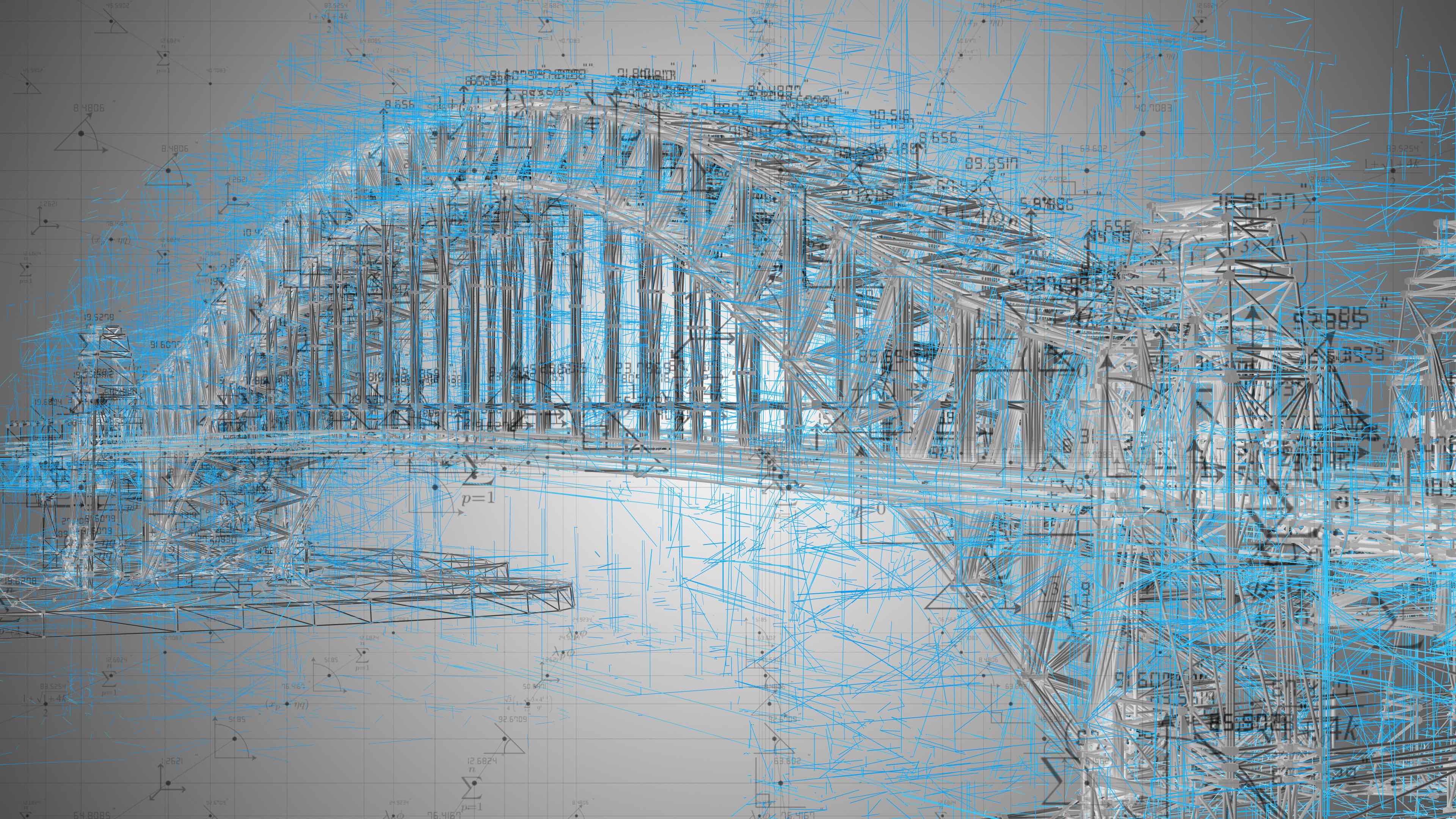 The expansion of digital design capabilities was highlighted as a key innovation of the last 25 years (Shutterstock)
The collaborative features enabled by modern software have led to multiple benefits: “The higher the degree of collaboration, the better the chances of building bridges right the first time,” said one, “The other great advantage it brings is early contractor involvement, which not only simplifies the construction stage, but it also leads to significant overall savings,” said another. Indeed, one responder felt that it had helped encourage “collaboration between engineers and architects in the design of bridges”.
However, some of the positive comments were qualified with caveats: “The big disadvantage to all this is that the industry is getting used to clicking buttons on a screen rather than truly understanding the structural behaviour/optimising the design at concept stage,” and, “It has also taken a big toll on the technical ability of the engineer, who is nowadays transforming herself/himself into a software user rather than an applied scientist.” The dangers are clear, “The best bridges have become exceptional, but the worst are an anathema and an example of why bridge designers must understand the principles of design and art before being let loose on the wider world.”
In construction, the advent of alternative methods of project delivery were welcomed by many, with design-build mentioned several times as the best way of incentivising innovation. Accelerated bridge construction was also mentioned often, and with positivity, particularly in the context of speed of construction, reduced impact during works, increased safety and quality, and even acting as a driver for innovative thinking.
And, while many construction innovations described as having had the biggest impact related to developments in movable hydraulic formwork, heavy-lifting machinery, reverse circulatory drilling, precasting, and post- and pretensioning, the innovations that were most often cited were associated with materials and cable technology.
“The individually protected parallel strand system for ultra-long span cable-stayed structures. This was first used on Normandy Bridge almost 25 years ago. This new system, with the cables erected strand-by-strand, made it possible to upscale cable-stayed bridges into the span range previously reserved for suspension bridges.” Indeed, long-span cable-stayed bridges were frequently mentioned as being the most impactful innovation of the last 25 years, followed closely by the advent of the extradosed bridge and the promise of floating Norwegian bridges, still to come.
There appeared to be broad consensus on the important role played by the development of high-performance materials within bridge building in the last 25 years, particularly in the context of high strength and high corrosion resistance in steel and concrete. The advent of composite materials in particular stood out among readers as having huge potential in terms of reduced deadweight and maintenance costs through corrosion resistance, as well as in terms of structural strengthening. “Undoubtedly we are at the ‘Ironbridge’ stage of development, and the evolution of composite bridges over the next 20 years will be fantastic to see.”
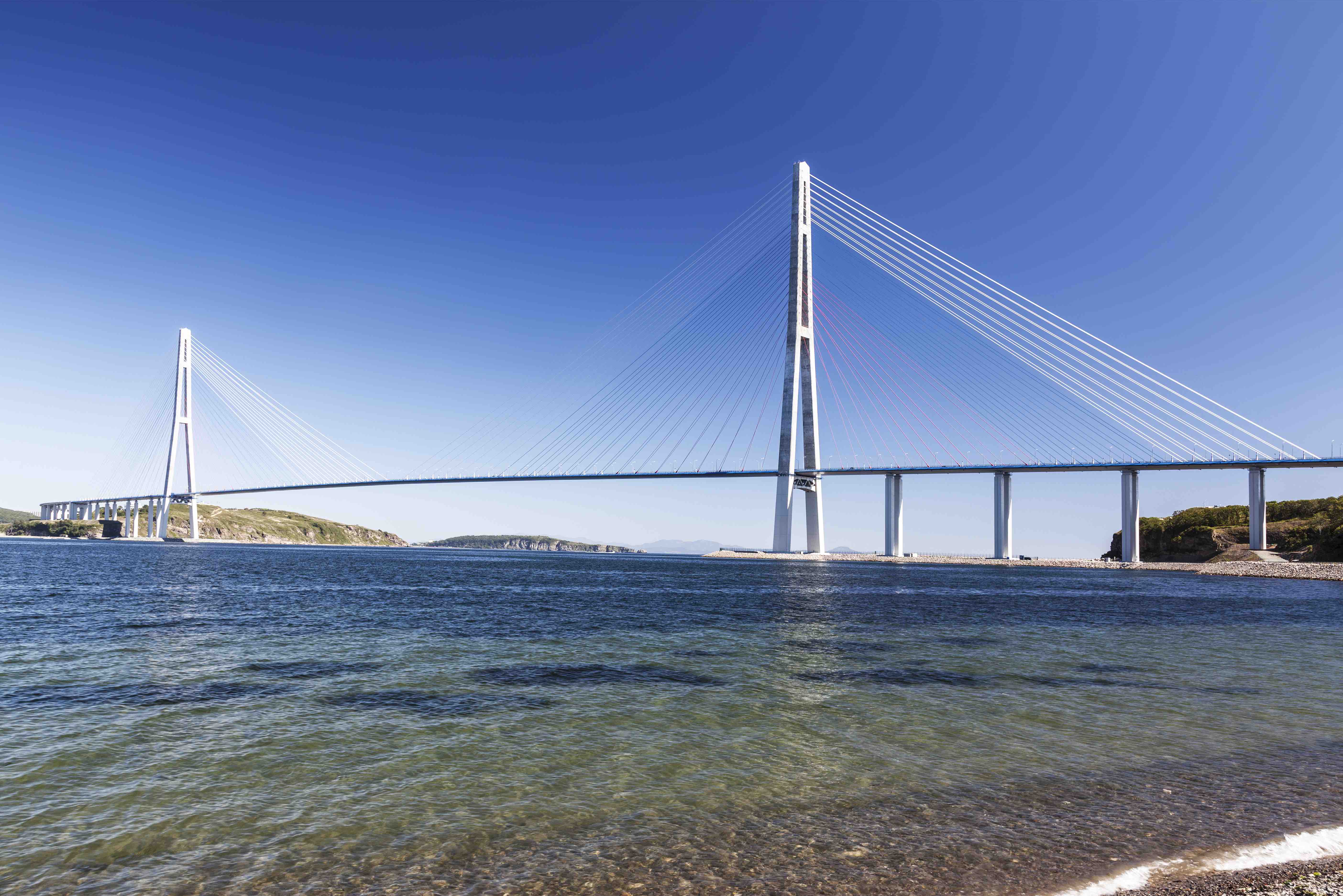 Advances in cable technology also featured heavily in readers' responses (Shutterstock)
The role played by earthquake-resistant materials and technologies in the form of seismic isolation and passive damping devices was also repeatedly remarked upon, both in the context of retrofits and new bridges: “It has allowed engineers to build safe and efficient bridges in challenging seismic environments.”
In the field of bridge maintenance, structural health monitoring took the lion’s share of the votes: “Structural health monitoring techniques have developed rapidly in response to significant demand to prove that existing bridges are still fit for purpose and allow maintenance interventions to be targeted towards structures which may have underlying problems;” “The ability to build-in or retrofit monitoring sensors to bridges will allow engineers to extend the lives of those bridges.”
SHM was closely followed (in the number of times it was mentioned) by inspection technology such as Lidar and drones: “Inspections by drones, using various photography and digital mapping techniques, has allowed bridge inspections to be carried out safely, without a need for complex access techniques, whilst providing detailed records for future comparison at much reduced costs.”
Finally, one respondent preferred to look to the future rather than the past: “I believe the biggest innovation has yet to take place: when bridge engineers have to help with the challenge of climate change, how will circularity and durability play a role in bridge engineering?"