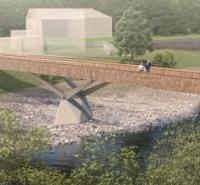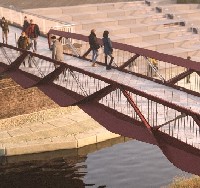
Expressions of interest are being invited in the first stage of the two-stage competition. Teams who progress to the second stage will then need to conceptualise a design incorporating a construction methodology, in order to mitigate the challenging environment and access constraints.
English Heritage said that teams should include both experienced architects and engineers who can deliver a challenging and sensitive project to deadline and within cost constraints. “English Heritage is a progressive patron and will encourage teams which balance seasoned experience with emerging talent,” it added.
Some 200,000 people a year visit the castle and headland. The existing approach is physically demanding for visitors and relies on a wooden footbridge built in 1975 to cross the eroded isthmus that separates the two surviving parts of the castle.
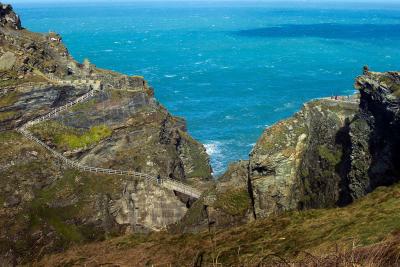
The bridge suffers from congestion in the peak season as do the linking paths, which are becoming worn in places. Its replacement will be 28m higher than the current crossing and have a 72m in span, opening up dramatic new views of the headland, coastline and Atlantic seascape. It will trace the path – now lost through collapse and erosion – of the original land-link.
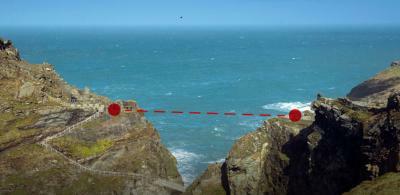
The new structure will be expected to exemplify design at its most assured, according to the competition brief. “English Heritage envisages an elegant, even structurally daring, concept, which is beautiful in its own right and sensitively balanced with the landscape and exceptional surroundings – the site lying within an Area of Outstanding Natural Beauty," it says.
Total project costs are estimated to be US$6.3 million and delivery of the bridge is expected to be completed by spring 2019.
The competition is being managed on behalf of English Heritage by Malcolm Reading Consultants. The closing date for expressions of interest is 21 July. Details can be found on Malcolm Reading Consultants’ website (link opens in new tab).