A series of special events is planned this year to celebrate the centenary of the longest transporter bridge in the world; while the events will offer the opportunity to raise the profile of this historic icon, the celebrations will be followed by a programme of restoration work which are intended to provide a more long-term appreciation of the structure.
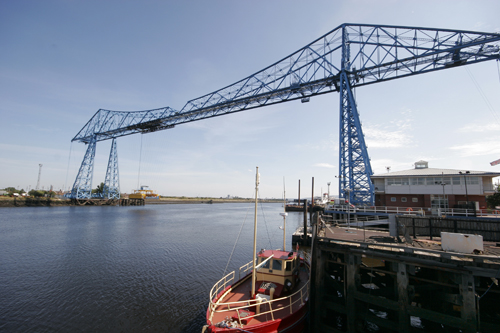
The planned work will improve access to the high level of the structure and enable visitors to see more of the bridge and learn about how it operates. The structure, which crosses the River Tees in Middlesbrough in the north east of England, was opened in 1911 and is still fully operational today. Only two other transporter bridges still exist in Britain, and only a few in the rest of the world – including the oldest example, the 1893 bridge in Bilbao, Spain, the 1906 Newport Transporter Bridge in Wales and the 1916 example in Warrington, in the north east of England.
The Middlesbrough Transporter is a total length of almost 260m, making it the longest of those remaining in the world. Its cantilever construction creates three main bridge spans, giving it a unique appearance. Each half of the bridge has an anchor span of 42.6m, and a cantilever of almost 87m across the river to the mid span. The passenger gondola is suspended by steel cables from a wheel and rail system approximately 49m above the River Tees.
Whilst Middlesbrough's Transporter is the largest operational bridge of its type, it was not the largest ever built – that honour is believed to belong to the almost 305m-long bridge that was built over the River Mersey near Widnes in north east England, which was closed in 1961 and has since been demolished. The Middlesbrough bridge is fully operational and provides a regular quarter-hourly service between Middlesbrough and Port Clarence for 18 hours a day, crossing the river in two minutes.
Its historic significance was recognised in the 1980s with a Grade II* listing which offers protection to the structure, but also means that any proposed restoration work is subject to additional constraints and needs special permission from heritage bodies. Middlesbrough Borough Council is responsible for the day-to-day running and maintenance of the bridge, and its principal engineer of built environment solutions, Rodger Wakerley, has been looking after the structure for more than a decade.
He explains that the first part of the programme of works will be a full repaint of the bridge, which they intend to carry out during the 2012 summer season. This work will in fact be funded by the joint owners, Middlesbrough and Stockton-on-Tees councils, out of the regular budget, and is expected to cost some US$1.6 million.It will likely be carried out by roped access contractors. A US$4.4 million grant from the Heritage Lottery Fund will be used for two main purposes – the first includes organisation of a series of events to celebrate the centenary of the structure in October, and the second to carry out construction work to the structure.
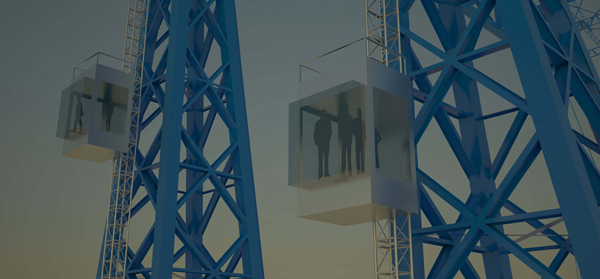
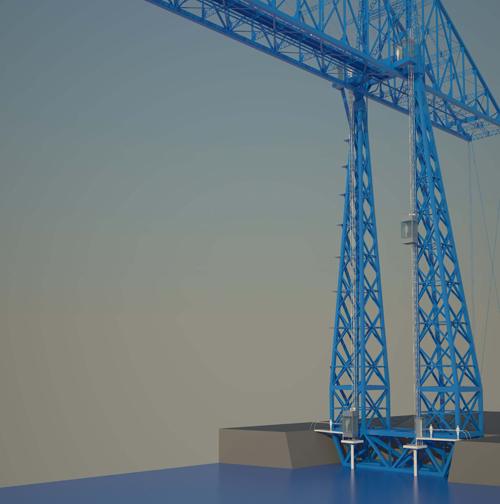
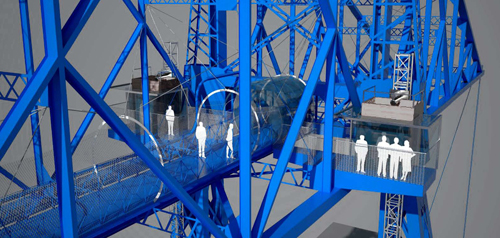
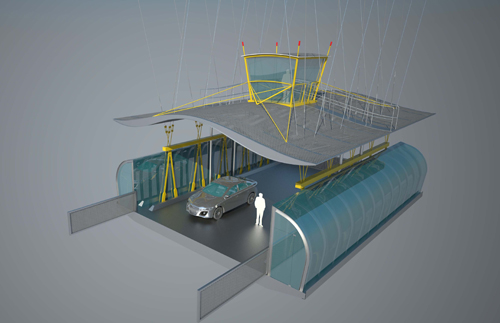
This latter aspect of the work will involve the installation of two glass viewing lifts, one on each leg of the Middlesbrough side of the bridge, to make the upper walkway accessible as a tourist attraction. Improvements will be made to the walkway itself, while at ground level a glass canopy will be installed around the gondola to offer better views during the crossing, and the visitor centre and interpretation boards will be redesigned and updated.
A range of educational activities will also be on offer such as trips to the Teesside archives where people will have the chance to learn more about the bridge’s extensive history and workshops for local schools. Volunteers will be given opportunities to lead guided tours, arrange talks and help with important maintenance work. One of the challenges with the construction work, as Wakerley explains, is that it must be carefully designed to have no permanent impact on the structure. No bolting or welding is allowed, and anything attached to the structure – for example the tracks for the two lifts – must be fastened on using clips.
At the upper level, new walkways will be built to improve access to the main span, and special high-quality mesh will be attached to the outside of the balustrade to make it safe for the public. The metal floor grating on the walkway will be replaced with new panels that are not so transparent. Luckily the gondola is not the original, hence it was a simpler procedure to get permission to adapt this structure. A proposed glass canopy will offer pedestrians clearer views up and down the river as they cross it.
The existing motor room and the winding house are planned to be altered and extended so that visitors can view the operation of the motor and better understand how the gondola is operated. Wakerley says that the intention is to let the whole of the bridge works as a single contract, and that the council will be inviting expressions of interest for the work in the near future.
A full principal inspection will also be needed before the contract starts. Design work so far has been carried out by Arup, who will be retained to assist where needed throughout the contract letting and construction stage. Funding from the HLF does have strings attached – in particular that the funding body has an oversight role, and also that the money must all be spent by the end of August 2014. Construction work is expected to be complete in time for the 2013 summer season.