After final preparation in Rosyth, the completed caissons will range from 27.8m to 32.8m in external diameter. The tallest one, which will enable construction of the south tower, will be 40m in height and weigh 12,000 tonnes.
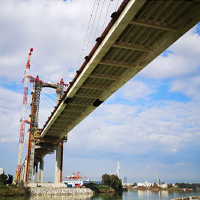
Using GPS technology, the drum-like structures will be precisely positioned and then lowered deep into the seabed. Up to 16,000m3 of underwater concrete will then be poured into each to a depth of about 14m below sea level to create a concrete plug, after which the water will be pumped out. This will then provide a safe and dry working environment for the construction of the crossing’s reinforced concrete bases and the bridge’s 207m high towers.
Ramboll is the lead partner in the international JV design team, also comprising Grontmij and Leonhardt Andrä, providing services to the Forth Crossing Bridge Constructors (FCBC) consortium for the US$2.4bn Transport Scotland project.
The cable stayed bridge crossing is due to be completed in 2016.
- Dramatic pictures of the caissons alongside the existing road and rail bridges can be seen on Robert McCulloch's flikr photostream.