National Highways confirmed that emergency inspections earlier this week identified 35 lighting columns on the 5,128m cable-stayed Prince of Wales Bridge (formerly the Second Severn Crossing) as being at risk of collapse, posing a significant hazard to both traffic safety and the structural integrity of the crossing. Opened in 1996, the bridge carries six lanes of the M4 motorway across the River Severn about 218km west of London. Its 456m cable-stayed main span is supported by 240 stay cables in a modified harp arrangement, soaring 101m above a 34.6m-wide deck.
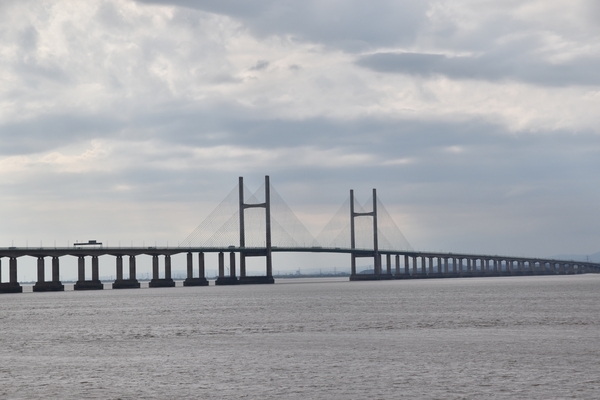 The Prince of Wales Bridge features wind barriers to reduce the effects of high winds (Shutterstock/JoeEJ)
The bridge faced increased safety risks when the storm added significant lateral loading to the already weakened columns. Engineers cited age-related deterioration and possible corrosion as underlying factors, with high winds exacerbating the damages.
To address the compromised lighting posts, the crossing was fully closed from 20:00 on 9 December until 06:00 the following morning. During this period, National Highways’ teams removed the defective columns under controlled conditions. Traffic was diverted via the adjacent Severn Bridge, requiring temporary suspension of its 7.5t weight limit and convoy operations for heavy goods vehicles.
Following completion of the overnight works, the Prince of Wales Bridge reopened on 10 December. However, interim restrictions remain in place, including a nightly 7.5t weight limit and a reduced speed limit of 64km/h, while plans for full restoration of lighting infrastructure progress.