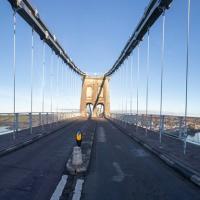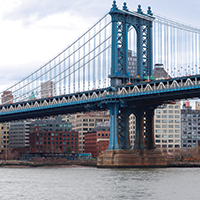

Engineers should play a bigger role in nominating bridges for inclusion on the World Heritage list, argues Eric DeLony
How many of today's bridge engineers would expect their structures to ever be designated as World Heritage structures? In fact, how many engineers are even aware that bridges form part of the World Heritage list maintained by Unesco? But engineers can actually play an important role in evaluating and nominating the best of the world's bridges to this distinguished list.
In order to meet World Heritage criteria, a bridge must be of outstanding universal value and must illustrate or interpret world heritage in terms of engineering, technology, material advancement, fabrication, transportation, communication, history, or culture. The two-stage nomination process is not entirely straightforward (see box) but listing can bring obvious benefits in terms of cachet and publicity, as well as the possibility of funding if necessary.
Examples of World Heritage bridges include 'obvious' structures such as the Pont du Gard and Segovia Aqueduct; Pont Avignon, Ponte Vecchio, Santa Trinita, Ironbridge, the Pulteney Bridge in Bath, England, and Roman bridges in Cordoba, Salamanca and Merida in Spain, and Trier in Germany. The list even includes the Old Bridge in Mostar, Bosnia-Herzegovina which was rebuilt after destruction through the help of an international scientific committee. The committee was established as a symbol of reconciliation, international cooperation and to recognise the coexistence of diverse cultural, ethnic and religious communities. The reconstructed bridge was inscribed in 2005, and is one of only six bridges which are listed as structures in their own right.
Although so few bridges have been inscribed as individual structures, many have been acknowledged because they form part of historic centres or cultural landscapes which have been listed. For example, the Roman bridges in Cordoba, Merida and Trier are mentioned in the evaluation by the International Council on Monuments & Sites, whereas in the case of Salamanca, the documentation justifying inscription of that city does not mention the bridge.
Although bridges are embedded in historic city centres or large cultural landscapes, they may not necessarily be of outstanding universal value. Despite this clarification, many of these embedded bridges are distinctive structures, and if included, World Heritage bridges would number in the hundreds. For example, 29 historic bridges including the Pont Neuf, Passerelle des Arts and Pont de la Concorde are included in the nomination for the banks of the Seine. Other more recent bridges, such as the Passerelle de Solferino would complete the 'family' of bridges within the boundaries of this nomination - certainly something for the Parisians to consider.
Similar examples would include the aqueducts on the Canal du Midi; the decorative bridges in Dessau-Wörlitz Park, Germany; Ponte Pietra and Ponte Castlevecchio in Verona; the hundreds of bridges spanning the canals of Venice, or St Petersburg; the bridges in the Spanish city of Toledo; viaducts on the Semmering Railway in Austria; India's Darjeeling-Himalayan Railway and Nilgiri Mountain Railway which include bridges and viaducts; the Blue Wonder steel bridge, part of the suspension cable railway in the Dresden-Elbe valley in Germany; the Charles Bridge over the Danube in Prague or the decorative bridges in the Summer Palace and Imperial Garden of Beijing. The most recent World Heritage bridge is Puente Vizcaya transporter bridge in Portugalete, Bilbao, inscribed this summer - Spain's first engineering World Heritage monument.
World Heritage properties must meet one or more of the following criteria and pass the test of authenticity in design, materials, workmanship or setting. They should represent a unique artistic achievement, a masterpiece of the creative genius; have exerted great influence, over a span of time or within a cultural area of the world, on developments in engineering theory, technology, construction, transportation and communication; or be an outstanding example of a type which illustrates a significant stage in bridge engineering, material or technological developments.
Reconstructed bridges are acceptable if the reconstruction was carried out on the basis of complete and detailed documentation of the original artifact, not conjecture. This criterion of authenticity was applied to the reconstructed Old Bridge in Mostar. It would similarly apply to Kintaikyo Bridge, over the Nishiki River in Iwakuni, Japan, or Palladio's Bridge over the River Brenta at Bassano a Grappa near Venice. Clearly, bridges and aqueducts surviving from the Roman Empire have been rebuilt many times over millennia.
In the same context, some bridges have been relocated when unable to function at their original site. It is not unusual in the United States, for example, to relocate a metal truss bridge to a less-travelled road when it can no longer handle modern traffic, and there is no reason to believe that this does not apply elsewhere. This is within the functional tradition of some bridge types and should not be viewed as a negative factor in determining the integrity or authenticity of a structure.
The engineering achievements of Isambard Kingdom Brunel are being celebrated throughout the UK this year (Bd&e issue no 43). English Heritage chairman, Sir Neil Cossons, announced that segments of Brunel's Great Western Railway presently on the UK's tentative list would be proposed for listing in 2010. This would add some of the UK's most significant bridges to the World Heritage List, such as the Wharncliffe Viaduct and Maidenhead Bridge, and other major railway engineering works such as Paddington Station, Box and Middle Hill Tunnels, the bridges and right-of-way through Bath, Temple Meads Station, and the Great Western Dock in which the iron-hulled SS Great Britain is berthed.
In addition to GWR features, two other Brunel-designed bridges - Clifton Suspension Bridge and Royal Albert Bridge - are likely to be considered according to the recently published consultation booklet, written by Keith Falconer who is coordinator of the World Heritage steering group within English Heritage. The Forth Railway Bridge in Scotland, designed by Sir John Fowler and Benjamin Baker is on the UK's tentative list and is scheduled to be put forward for inscription in future years. Thomas Telford and William Jessop's Pontcysyllte Aqueduct, the great iron trough and stone pier structure built in 1805 across the River Dee in Wales has also been submitted to Unesco.
The inclusion of so many engineering and industrial sites on the UK's tentative list has attracted criticism from some sectors, but both Forth and Pontcysyllte also have strong support, particularly from local councils in Scotland and Wales.
In the United States, there are 21 World Heritage sites - nine cultural and 12 natural. There are no bridges designated though two, the Brooklyn and Eads bridges, are on the tentative list, which presently is being revised. While the UK revised its list 16 years ago, America's tentative list is currently being updated for the first time in 24 years. The deadline for applying is 1 April 2007 and applications must be made by property owners to the National Park Service, which is responsible for compiling the USA's list. This means that the cities of New York, St Louis and San Francisco must apply in the next six months for the Brooklyn, Eads and Golden Gate bridges to be included on the tentative list. Preparation of World Heritage documentation would come later.
Why would an owner want an historic property designated as a World Heritage? To be compared with other international treasur